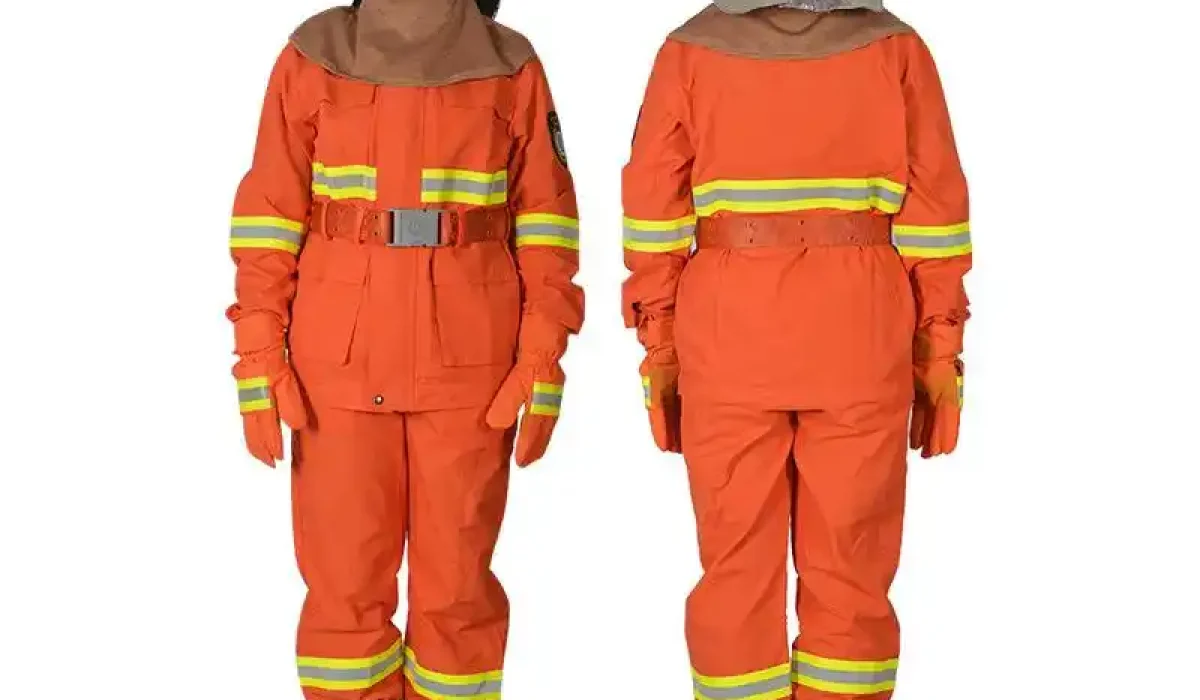
Fire retardant clothes protect workers from flash fire, arc flash, and radiant heat. The problem is that buyers face a maze of fiber choices and standards. That uncertainty delays decisions. The solution is a clear, procurement-focused guide to the core materials, how they perform, and how to evaluate suppliers with data you can verify.
Fire retardant clothes use a mix of inherently flame-resistant fibers—such as meta-aramid, para-aramid blends, PBI, and modacrylic—and FR-treated cotton or cotton blends. Depending on risk, garments layer outer shells, moisture barriers, and thermal liners. Buyers should map materials to standards like NFPA 2112, EN ISO 11612, and ASTM F1506, then verify third-party test reports.
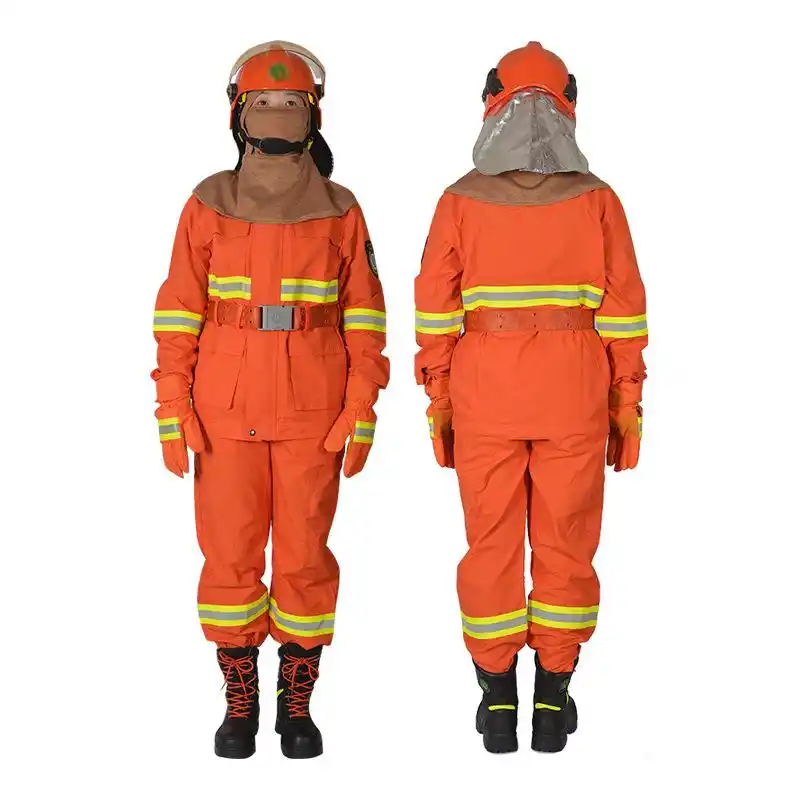
Choosing the right material is not only about heat resistance. It is also about durability, comfort, laundering life, and certification pathways. I will break down the mainstream fibers, compare inherent FR vs. treated options, map materials to standards, and share supplier evaluation tips from my work manufacturing aramid fibers end-to-end.
Which fibers are most common in fire retardant clothes?
Many spec sheets list brand names without explaining fiber roles. That causes confusion and risk. A quick orientation helps buyers ask better questions and avoid mismatches.
The most common fibers in fire retardant clothes are meta-aramid (outer shells and coveralls), para-aramid (strength and cut/abrasion reinforcement), PBI blends (high-heat shells), modacrylic and FR viscose (soft, inherent FR comfort layers), and FR-treated cotton (cost-effective basics). Wool appears in niche layers; aluminized fabrics add radiant heat protection.
The core fiber families and what they do
Meta-aramid (m-aramid): Inherently flame-resistant, self-extinguishing, and stable at elevated temperatures. Typical in industrial FR coveralls, station wear, and as part of turnout gear shells. Limiting Oxygen Index (LOI) commonly around high 20s, and it chars rather than melts or drips. It balances heat resistance with comfort and durability.
Para-aramid (p-aramid): Extremely high strength and cut/abrasion resistance. It also has inherent flame resistance and high LOI, but it shines when blended to reinforce fabrics that must resist mechanical wear or to enhance thermal liner integrity. I use p-aramid widely for cut-resistant gloves and ballistic gear; for garments, it is a reinforcement workhorse.
PBI (polybenzimidazole) blends: Exceptional thermal stability and no melting behavior, often blended with aramid for firefighter outer shells that must perform under intense, sustained heat. It carries a premium cost but offers a high safety margin in structural firefighting.
Modacrylic: Inherently flame-resistant synthetic that self-extinguishes. It provides a soft hand and good dyeability. It is often blended with cotton or other fibers to improve comfort in daily-wear arc flash or flash fire workwear.
FR viscose and other cellulosics: Engineered viscose with built-in FR chemistry improves moisture management and comfort in liners and blends. FR viscose is commonly paired with aramids in thermal liners for turnout gear to manage sweat and heat stress.
FR-treated cotton: Regular cotton treated with durable FR chemistry (e.g., ammonia-cured or polymeric finishes) to char rather than ignite. It is cost-effective and widely used for oil and gas, utilities, and general industrial FR uniforms. Buyers should verify the number of launderings guaranteed for FR durability.
Wool: Naturally flame-resistant with a relatively high LOI for a natural fiber. It can be part of mid-layers or specialty garments where comfort in cold-weather FR contexts matters.
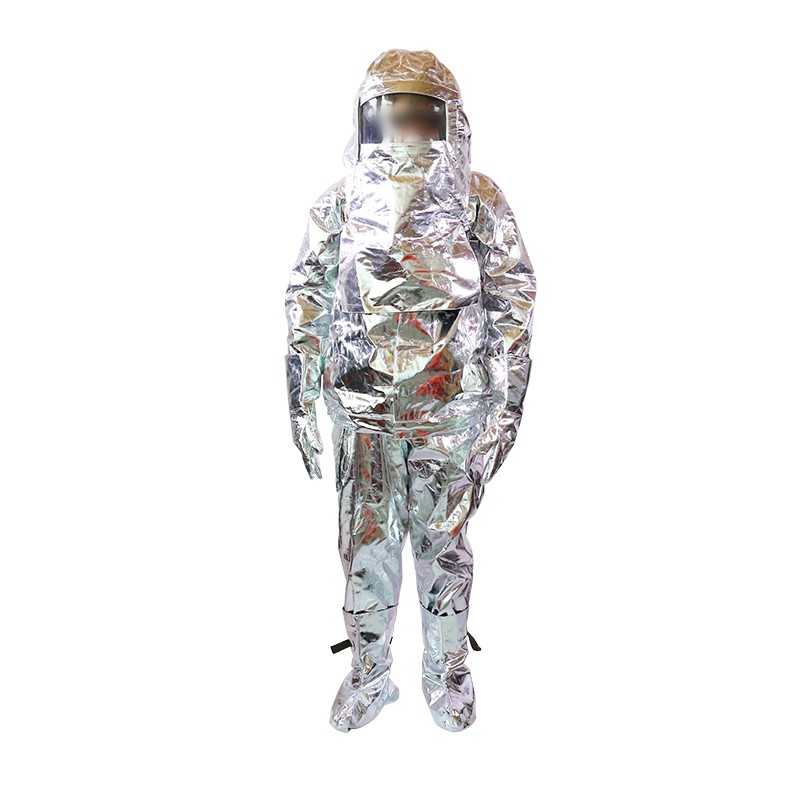
Aluminized fabrics: Not a fiber family but a finish on high-temp textiles (often aramid or fiberglass bases) to reflect radiant heat in foundries and metal processing. They appear as outer aprons, leggings, or jackets.
Below is a comparative snapshot. Values vary by formulation; always request supplier-specific, third-party test data.
| Fiber/Material | FR Type | Typical Use in Garments | LOI (approx.) | Notes |
|---|---|---|---|---|
| Meta-aramid | Inherent | Outer shells, coveralls | ~28–30 | Chars, no melt/ drip; stable heat performance |
| Para-aramid | Inherent | Reinforcement, liners | ~29–30 | Very high strength; boosts abrasion/cut resistance |
| PBI blends | Inherent | Firefighter shells | >40 | Superior thermal stability; premium cost |
| Modacrylic | Inherent | Workwear blends | ~28–32 | Soft, dyeable; often blended with cotton |
| FR viscose | Inherent | Thermal liners | ~28–30 | Moisture management; comfort enhancement |
| FR-treated cotton | Treated | Industrial uniforms | ~26–28 | Verify wash durability and treatment chemistry |
| Wool | Natural FR | Mid-layers | ~25–26 | Comfort in cold climates; limited in high heat |
| Aluminized textiles | Reflective finish | Radiant heat PPE | N/A | Reflects radiant heat; base fabric often aramid |
As a manufacturer of aramid fibers from polymerization onward, I see m-aramid and p-aramid as the backbone of many FR systems. My team increasingly blends para-aramid microfibers into thermal liners to enhance durability without compromising breathability.
How do inherent FR materials compare to FR-treated cotton in fire retardant clothes?
Teams often debate inherent versus treated fabrics. Budget pressures push toward treated cotton; risk and durability push toward inherent FR. The wrong choice drives up total cost later.
Inherent FR fibers (aramid, modacrylic, PBI) have flame resistance built into the polymer, so performance lasts the garment’s life. FR-treated cotton relies on durable finishes; performance depends on chemistry and laundering. Treated cotton is economical, while inherent FR generally offers longer service life, better heat stability, and no melt/drip behavior.
Decision trade-offs that matter over the garment life
Protection durability:
- Inherent FR: The FR property is part of the fiber. It does not wash out. Fabrics maintain flame resistance across the garment’s life, subject to normal wear.
- FR-treated cotton: Quality varies by chemistry and cure. Good systems can retain FR through 50–100+ industrial launderings. Buyers must verify with certified wash-durability reports (e.g., ISO 15797 protocols or supplier-specific test methods).
Heat performance:
- Inherent FR, especially aramid/PBI: Better thermal stability and resistance to shrinkage at high heat. No melt/drip. Better TPP potential in multi-layer assemblies.
- FR-treated cotton: Char-forming but cellulosic base can carbonize and lose strength under sustained heat. Adequate for flash fire/arc flash when correctly rated, but less margin at extreme temperatures.
Comfort and moisture management:
- Treated cotton and cotton-rich blends: Familiar hand feel, good breathability. Many utilities and O&G workers prefer the comfort for daily wear.
- Inherent FR systems: Modacrylic and FR viscose blends approach cotton’s comfort; aramid-rich shells are more durable but can feel stiffer unless engineered with hybrid blends and advanced finishing.
Cost and total cost of ownership (TCO):
- Upfront cost: FR-treated cotton is typically lower.
- Service life: Inherent FR garments often last longer under heavy laundering and abrasion, particularly when p-aramid reinforcement is used in high-wear zones. The replacement cycle can favor inherent FR in high-utilization fleets.
Standards and ratings:
- Both can meet NFPA 2112, EN ISO 11612, and ASTM F1506 when engineered properly. Request current third-party certificates and lot-level test data to validate conformance and consistency.
In practice, I help OEMs segment their fleets: treated cotton for lower-risk, high-quantity daily wear, and aramid- or modacrylic-based sets for higher-risk tasks, hot work, or supervisors who face varied exposures.
What performance standards define compliant fire retardant clothes?
Procurement teams need a clear map from task hazard to standard. Without it, bids drift and compliance risk rises.
The key standards for fire retardant clothes include NFPA 2112 (flash fire), ASTM F1506 and IEC 61482-2 (arc flash), EN ISO 11612 (heat and flame), and NFPA 1971 (structural firefighting ensembles). Select materials and constructions tested to these standards and insist on third-party certifications and current test reports before purchase.
Match hazards to standards, then choose materials accordingly
Flash fire (Oil & Gas, petrochem):
- NFPA 2112 (North America): Requires garments to meet thermal shrinkage, heat resistance, and manikin test thresholds. Materials commonly include FR-treated cotton, modacrylic/cotton, and aramid blends.
- EN ISO 11612 (EU/global): Tests limited flame spread, convective and radiant heat, molten metal splash. Aramid, PBI blends, and modacrylic systems are frequent.
Arc flash (Electrical utilities, industrial power):
- ASTM F1506 defines FR textiles for arc-rated clothing; ratings are expressed as ATPV or EBT cal/cm².
- IEC 61482-2 is the EU/global companion, with box test (Class 1/2) and open-arc ratings. Aramid blends and cotton-modacrylic blends are typical; higher cal/cm² often favors aramid-rich systems.
Structural and proximity firefighting:
- NFPA 1971 specifies the ensemble: outer shell, moisture barrier, thermal liner. Materials often use PBI/aramid outer shells, PTFE-based moisture barriers on aramid substrates, and aramid/FR viscose thermal liners. Aluminized shells appear in proximity gear for radiant heat.
Station/work uniforms:
- NFPA 1975 (station wear) governs low-flammability textiles for firefighters’ station uniforms; m-aramid and modacrylic blends are common.
General FR properties:
- ASTM D6413 or ISO 15025 vertical flame tests are used widely for screening. They are not sufficient alone for hazard-specific compliance but are important indicators.
Procurement note: Always ask for current third-party certificates (e.g., UL for NFPA) and lot traceability. In my operation, we maintain ISO 9001 and AS9100D quality systems; I recommend that buyers verify these certificates directly with the registrar for any shortlisted supplier.
When should you choose meta-aramid vs para-aramid for fire retardant clothes?
Buyers often hear “aramid” as a single category, but m-aramid and p-aramid perform differently. Misapplication leads to over- or under-specification.
Use meta-aramid for inherent FR outer shells and coveralls where heat stability, no melt/drip, and balanced comfort are required. Use para-aramid to reinforce areas needing high tensile, tear, and cut resistance, to improve abrasion life, and to raise arc ratings in blends. Many best-in-class garments combine both.
Practical selection guidance from the fiber up
Thermal behavior:
- Both m-aramid and p-aramid are inherently flame-resistant and do not melt/drip. Meta-aramid is formulated for thermal stability in apparel applications; p-aramid maintains strength at temperature but is often leveraged more for mechanics and reinforcement.
Mechanical durability:
- Para-aramid’s high tensile strength and modulus markedly improve tear and abrasion resistance. I often specify p-aramid rip-stop grids in outer shells and reinforce knees, cuffs, and shoulders. Para-aramid stitch thread also extends seam life.
Comfort and hand:
- Meta-aramid can be engineered into softer weaves and blends that meet daily-wear needs. Para-aramid alone can feel stiffer; small percentages in blends add durability without sacrificing comfort.
Arc/flash performance:
- Both fibers contribute to arc ratings; p-aramid often allows higher cal/cm² in comparable weights. For flash fire (NFPA 2112), either fiber can meet requirements when the fabric is properly constructed and finished.
Cost and TCO:
- Para-aramid content typically increases material cost but may reduce replacement frequency through durability gains. For high-wear fleets, this can improve TCO.
Application mapping:
- Industrial FR coveralls: m-aramid or modacrylic blends, with targeted p-aramid reinforcement.
- Firefighter outer shells: PBI/m-aramid with p-aramid reinforcement in high-wear areas.
- Liners: m-aramid blended with FR viscose for comfort, with para-aramid stitch and scrims for structure.
From my production line experience, tuning denier, filament count, and finish on both m- and p-aramid yields tangible differences in drape and abrasion. Request swatches across multiple constructions and test them under your laundering and work conditions.
What fabric constructions boost protection in fire retardant clothes without sacrificing comfort?
You can buy a great fiber and still get a poor garment if construction is wrong. Fabric architecture and layering drive real-world performance and heat stress.
Combine balanced weaves (e.g., twill or rip-stop) with engineered blends and layered systems. Outer shells resist flame and abrasion; moisture barriers block water/chemicals; thermal liners manage heat and sweat. Use para-aramid reinforcement in wear zones and FR viscose for comfort. Always validate with TPP, ATPV, and shrinkage tests.
Build protection into the fabric and the system
Outer shell choices:
- Twill, rip-stop, and dobby weaves distribute stress and resist tearing. Rip-stop grids with para-aramid yarns help localize damage.
- Blends: PBI/m-aramid shells offer high heat stability for firefighting; m-aramid/modacrylic or m-aramid/FR viscose improve comfort for industrial wear.
Thermal liners:
- Multi-component liners combine spunlaced or quilted structures with m-aramid/FR viscose blends. These manage perspiration and reduce heat stress.
- Scrims with fine denier para-aramid increase mechanical integrity without significant weight gain.
Moisture barriers:
- Laminates (e.g., PTFE-based membranes on aramid substrates) provide liquid barrier while maintaining breathability. This is critical in firefighter gear to block steam and chemicals.
Stitching, trims, and closures:
- Use para-aramid or m-aramid threads. Standard polyester thread can melt and fail.
- Select FR reflective tape, zippers, and hook-and-loop closures tested to the same standards. Poor trims can invalidate certifications.
Weight versus performance:
- Industrial FR coveralls: 6–9 oz/yd² fabrics for daily wear with ATPV 8–12 cal/cm² common.
- Higher hazard: 9–12+ oz/yd² or multi-layer assemblies, achieving ATPV 20–40+ cal/cm².
- Always pilot wear-test. I ask customers to run small batches through their laundering for 25–50 cycles to measure shrinkage, hand, and colorfastness.
Testing and metrics:
- TPP (Thermal Protective Performance) for firefighter systems.
- ATPV/EBT for arc flash.
- Dimensional stability and heat shrinkage (e.g., 260°C exposure), seam strength after heat, and vertical flame (ASTM D6413/ISO 15025) as baseline.
When my lab evaluates new constructions, we vary weave density by ±5%, tweak para-aramid reinforcement positions, and adjust FR viscose proportion to hit a comfort-protection sweet spot. Small changes often yield measurable improvements.
How should buyers evaluate suppliers for aramid-based fire retardant clothes?
A strong design can fail in production without quality control. Supplier selection and ongoing verification decide fleet outcomes.
Evaluate suppliers on traceable fibers (meta-aramid/para-aramid provenance), certified quality systems, third-party compliance certificates, and lot-level test data. Audit weaving/finishing controls, FR durability after laundering, and accessory compliance. Run pre-shipment inspections and independent lab spot checks before awarding multi-year contracts.
A procurement checklist that reduces risk
Quality systems and certifications:
- Verify ISO 9001 for quality management; AS9100D indicates robust aerospace-grade process control. We maintain both, and I encourage buyers to confirm certificates with registrars rather than PDFs alone.
- For NFPA 2112 or 1971 garments, request current UL or equivalent third-party listings.
Fiber and fabric traceability:
- Demand documentation from polymerization (for aramids) through spinning, weaving/knitting, dyeing, and finishing. We supply batch IDs linking to polymer lots, tensile data, and finish add-on—this helps if a field failure occurs.
Consistency and lot testing:
- Ask for lot-by-lot: basis weight, weave density, tensile/tear, vertical flame, heat shrinkage, and colorfastness. For arc-rated fabrics, include ATPV/EBT periodic verification.
Laundering durability:
- Require FR performance after specified industrial wash cycles (e.g., 50–100), with protocols stated (temperature, detergent, drying). Include dimensional stability, seam integrity, and reflective trim performance.
Component compliance:
- Confirm threads, tapes, zippers, labels, and foams meet the standard. I have seen garments fail audits due to non-FR hook-and-loop or tape delamination.
Pilot and wear trials:
- Run in-field trials across climates and tasks. Measure user comfort, range of motion, and early abrasion points. Feedback often leads to targeted para-aramid reinforcement or fabric weight adjustments.
Supply continuity:
- Evaluate lead times, safety stock policies, and multi-plant redundancy. For global fleets, ensure export experience and documentation compliance. We export aramid fibers and fabrics worldwide; customs documentation accuracy matters more than most expect.
Ethical and environmental:
- Inquire about restricted substance compliance (e.g., REACH), wastewater handling from dye/finish, and worker safety. Increasingly, large enterprises make this part of award criteria.
I prefer to start with a technical data exchange, then a plant audit—virtual or on-site—before first article approval. This aligns expectations and reduces surprises in scaling.
Frequently Asked Questions
Are fire resistant and flame retardant the same?
Not exactly. “Flame resistant” often refers to inherent properties in the fiber (e.g., aramid, modacrylic, PBI). “Flame retardant” can refer to finishes added to otherwise flammable fibers (e.g., FR-treated cotton). Both can meet standards, but inherent FR typically maintains performance for the garment’s life.
How many washes can FR-treated cotton withstand?
It depends on the chemistry and cure. Quality FR treatments are designed for 50–100+ industrial launderings when washed per the supplier’s instructions. Always request third-party wash-durability data tied to the exact fabric lot, and replicate laundering in your facility before full deployment.
Do aramid fibers melt or drip in a fire?
Aramid fibers (both meta-aramid and para-aramid) do not melt or drip under typical exposure conditions for FR garments. They char and retain integrity better than many synthetics. However, performance depends on fabric construction; validate with standard tests like ASTM D6413, EN ISO 11612, and application-specific standards.
What arc rating should I specify for electrical work?
Base the arc rating on your hazard analysis per NFPA 70E or equivalent. Common daily-wear ratings are 8–12 cal/cm²; higher-risk tasks may require 20–40+ cal/cm². Achieving higher ratings often uses aramid-rich fabrics or multi-layer systems. Verify ratings via ASTM F1959 test reports for the exact fabric.
Are aluminized garments considered fire retardant clothes?
Aluminized garments reflect radiant heat and are used in foundry and proximity applications. They are built on heat-resistant base fabrics (often aramid or fiberglass). They are part of specialized PPE systems and should be validated against relevant heat and splash tests; they complement, not replace, standard FR workwear.
Conclusion
The materials used in fire retardant clothes span inherent FR fibers like meta-aramid, para-aramid blends, modacrylic, and PBI, plus FR-treated cotton for cost-effective coverage. The best choice depends on hazard, standards, durability, and comfort. If you need aramid fibers or aramid-rich fabrics engineered for certified FR garments, contact me for verified data, samples, and a supplier audit—so you can specify with confidence.